Tying Up Your Horse: Basic Safety for Everyday Handling

Tying up a horse is part of daily life in most stables, but it is also a moment when serious accidents can occur. A safe tie-up protects both the horse and the person handling it and helps everyday routines feel calmer and more organized.
What happens when things go wrong?
When a tied horse gets scared and cannot get free quickly, it may throw itself backwards or upwards in panic. Even if you only see a few scrapes, or the horse seems “ok” the next day, the strain on the neck, back and joints can cause hidden injuries that show up later as stiffness, pain or changes in movement. That is why safe tie-up routines and correct equipment are part of good welfare, not just “extra safety”.
Choosing a safe place to tie
Before you attach the horse to anything, look at the place you are using. The tie-up area should be calm, with enough space for the horse to turn, stand straight and move a little without bumping into walls or equipment. Avoid tying next to doors that open suddenly, windows where objects might pass by, narrow aisles or noisy, busy spots where other horses or people may surprise your horse.
A good tie-up area has:
- Non-slip flooring, so the horse does not slip if it moves. When using rubber flooring, make sure there are no edges where the horse can get a hoof stuck.
- No sharp edges, hooks or objects sticking out, especially within reach of the head, neck or hips.
- Clear, easy escape routes for the handler, so you can step away safely in any direction if the horse panics.
- The possibility for the horse to always see other horses.
Light and noise also matter. Horses relax more in even, calm natural light without strong shadows or glare, and they get stressed by loud clanging or echoing sounds. Reducing noise and choosing quiet equipment helps the horse feel safer from the start.
Never leave a tied horse unattended. Even calm horses can spook, slip, or become worried by an unfamiliar object or sound and a fast reaction can prevent a small scare from becoming a serious injury.
How long and how high should you tie?
The tie point should be on a strong, fixed structure and usually 20 cm higher than the horse’s withers when in cross-ties. It should be around the horse’s eye height if you use a single tie. This helps prevent the horse from feeling pressure on the neck too early, struggling more, stepping over the tie, or getting a leg caught. It is also more convenient for the person who is moving around the horse.
In general:
- Use the safest, lightest, and softest materials possible when tying up the horse. When the horse is tied up, it should be as comfortable as possible, so it can still show you what it is trying to communicate.
- The horse should be able to stand square without touching walls or posts on either side, and with plenty of space for handlers to move around.
- For a single tie: A tie length of around 65 cm gives the horse room to hold its head in a natural position but not walk away.
- For cross-ties: Tie length depends entirely on the specific space. If using poles, make sure they are not too narrow or restricting the horse’s head movement and wellbeing. The tie should be fixed in a stable position and not be too long, so the horse cannot turn around, get tangled, or reach the floor when the ties hang loose.
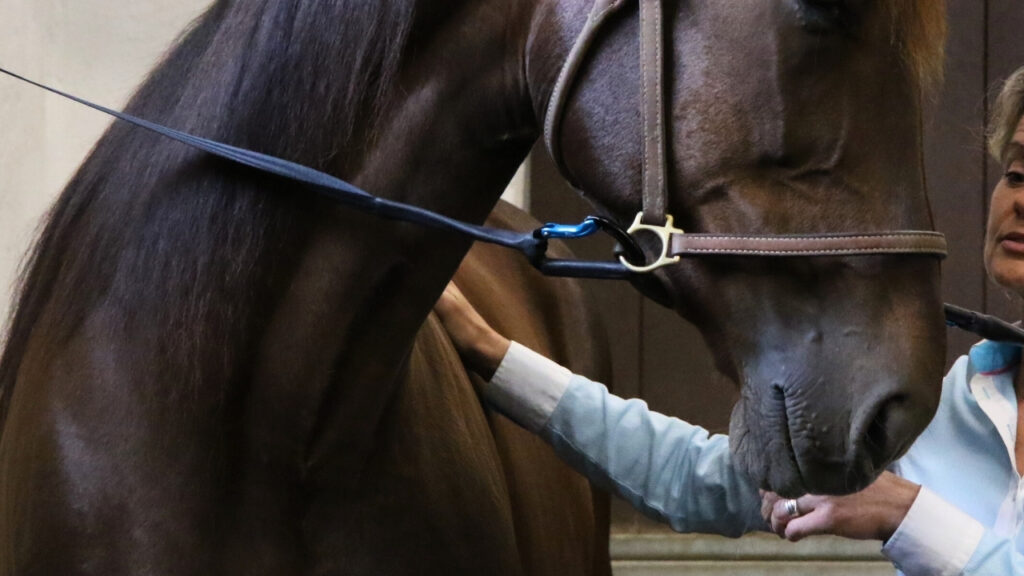
Everyday checks for safe tie-ups
Small, regular checks keep the tie-up area safe over time. Before you start your daily routines, take a quick look at:
- Clips and carabiners: Are they smooth, without sharp edges, rust or cracks?
- Release points: What exact release point do you have? Could any hard object fly towards the horse or you if the horse goes into flight/fight mode and something breaks? Is the Velcro® or other release part in good condition, so it will open at the right time?
- Walls, hooks and storage: Are brushes, buckets and tools stored away from the horse’s area?
When a horse starts to gnaw or bite, it is often a sign of discomfort or stress rather than “naughtiness”. Instead of just stopping the behavior, it is better to step back, check the situation, see what might be worrying the horse, and adjust things so the horse can feel more relaxed. The tie-up area should be a comfort zone where you interact with the horse in a calm, positive way.
Making tie-up safety a habit shows respect for the horse’s body and mind and supports long-term soundness and welfare. Calm, well-designed tie-up areas also make life easier for humans and give a professional impression to visitors.
Rachel Lundgren, Equine Safety & Wellbeing Specialist, CEO and Founder of Equimade www.equimade.com

Get the best grooming tips from Alan Davies
Carl Hester’s previous groom Alan Davies has a whole series of grooming videos in Ridely.
Take part of his many tips to give your horse the shine they deserve.
Do you want more educational content?
Check out our video library with over 500 videos with equestrian professionals all over the world!


